

Running a high-volume commercial kitchen feels like conducting a symphony at double speed. Flames roar under woks, prep stations churn out hundreds of covers, and grease vapours drift into every corner of the workspace. Amid that relentless pace, food safety and sanitation demand absolute discipline. A single overlooked spill or clogged grease trap invites bacterial cross-contamination, pest infestations, and sudden health code shutdowns.
To keep your culinary operation spotless without burning out your line cooks, you must replace ad-hoc scrubbing with a structured, time-bound sanitation blueprint. Combining disciplined daily staff checklists with scheduled commercial kitchen cleaning services protects your equipment, satisfies regulatory inspectors, and keeps your team proud of their workspace. Whether you manage a bustling hotel banquet hall or a busy central kitchen, partnering with professional commercial cleaning services alongside internal shift routines ensures nothing slips through the cracks.
| Cleaning Frequency | Target Areas & Equipment | Core Sanitation Tasks |
| During Every Shift | Prep counters, chopping boards, splashbacks, knives | Wipe spills immediately, sanitise cutting surfaces between raw and cooked food |
| End of Day (Daily) | Fryers, grill grates, range hoods, floor drains, sinks | Degrease cooktops, filter fryer oil, empty waste bins, scrub and mop non-slip floors |
| Weekly Deep Tasks | Walk-in chillers, oven interiors, shelving racks, wall tiles | Clean dishwashers, sanitise fridge gaskets, boil out fryers, wash vertical walls |
| Monthly / Quarterly | Exhaust ductwork, grease traps, ceiling vents, behind heavy units | Hire specialist technicians to strip carbonised grease and inspect ventilation fans |
Shift-by-Shift Discipline: Mastering the “Clean-As-You-Go” Rhythm
Waiting until the final ticket clears at midnight to start cleaning guarantees exhausted staff and half-hearted results. Instead, embed micro-cleaning habits directly into active service hours.
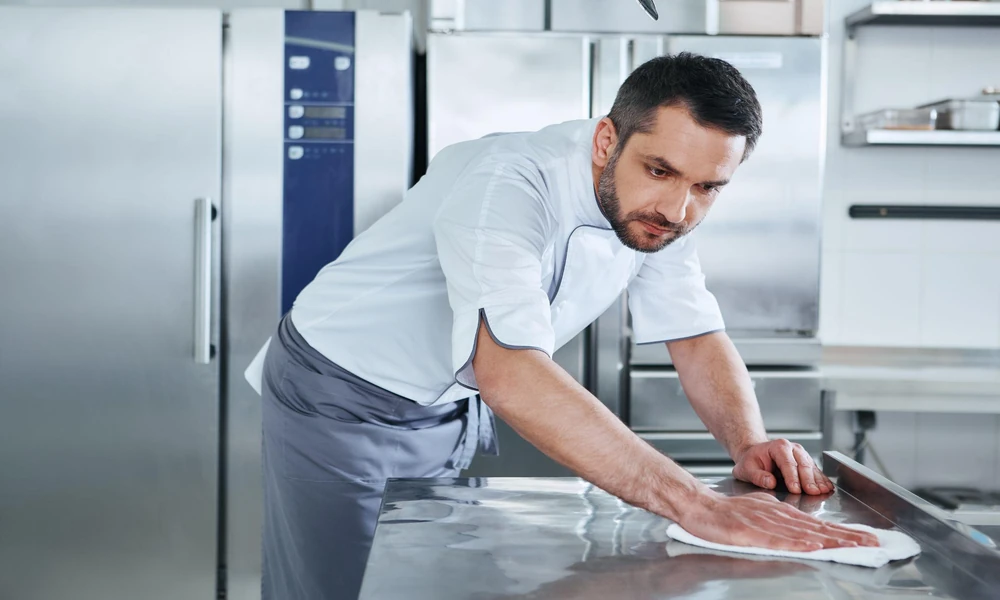
Assign clear station ownership so every chef maintains their immediate three-foot radius. Line cooks must wipe stainless steel prep tables with food-safe sanitisers every two hours, swap colour-coded chopping boards immediately after handling raw poultry, and sweep stray food scraps off the floor before they turn into slip hazards. When your team treats sanitation as an ongoing culinary step rather than an after-hours chore, closing time becomes dramatically faster and far less stressful.
The Closing Shutdown: Designing an Airtight Nightly Checklist
When the last customer leaves, your closing crew needs a crystal-clear, laminated checklist that eliminates guesswork. Divide the kitchen into distinct zones: hot line, cold prep, dish pit, and dry storage, and assign specific team members to sign off on each section.
Nightly protocols must target the surfaces that accumulate the heaviest organic residue. Kitchen porters should scrub floor drains, empty and sanitise rubbish bins, and run all removable range hood baffle filters through the high-temperature commercial dishwasher. Line cooks must scrape carbon buildup off flat-top grills, cover open condiment containers, and mop quarry tile floors with enzymatic degreasers that break down invisible oil films overnight.
Weekly and Monthly Blitzes: Tackling Hidden Grime Zones
Daily wipe-downs keep visible surfaces shining, but stubborn grease and limescale quietly build up inside hard-to-reach crevices. Schedule dedicated weekly hours during quieter weekday mornings to dismantle and deep-clean secondary equipment.
Have your staff empty walk-in chillers systematically to sanitise wire shelving, clean rubber door gaskets, and check expiry dates. Clean commercial dishwashers and steam ovens to prevent mineral deposits from ruining heating elements. Once a month, pull heavy fryers and convection ovens away from the walls to scrub behind them. For complex, high-risk tasks like degreasing vertical exhaust ducts and pumping out interceptor grease traps, bring in professional commercial cleaning services equipped with industrial steam blasters and heavy-duty extraction gear.
Accountability and Compliance: Auditing Your Hygiene Standards
A cleaning schedule only works when management enforces it consistently. Treat your sanitation roster with the same rigour you apply to inventory counts and food cost margins.
Conduct brief, 5-minute visual walk-throughs before releasing the closing shift, checking under prep tables and inside hand-wash sinks. Keep a dated cleaning logbook beside the kitchen office so health inspectors can verify your maintenance history instantly. Supplementing your internal logs with certificates from accredited commercial kitchen cleaning services demonstrates proactive due diligence, safeguarding your operating licence and brand reputation.
Consistency Protects Your Kitchen and Reputation
A high-performing kitchen thrives on precision, order, and immaculate hygiene. By breaking sanitation down into manageable shift habits, structured nightly checklists, and scheduled deep-cleans, you eliminate workplace hazards and extend the life of expensive culinary equipment. Empower your team with clear routines today, and run a kitchen that passes every inspection with flying colours.
Frequently Asked Questions
How often should commercial kitchen exhaust hoods receive professional deep cleaning?
High-volume kitchens operating heavy frying or grilling equipment should schedule specialist exhaust hood and ductwork cleaning every three months to prevent dangerous grease fires.
What is the difference between cleaning and sanitising in a commercial kitchen?
Cleaning removes visible food debris, dirt, and grease using detergent and water, whereas sanitising applies heat or approved chemical disinfectants to reduce bacteria to safe levels.
Can kitchen staff clean grease traps themselves?
Staff can skim small, under-sink grease interceptors weekly, but large commercial grease traps require licensed waste contractors to pump, scrape, and dispose of sludge legally.
Want to maintain impeccable hygiene standards without overburdening your busy kitchen crew? Contact Lifeline Cleaning today to arrange reliable, thorough commercial sanitation tailored to your operational schedule.
