

The Financial Blueprint of Home Maintenance and Upgrades
Your home is likely one of your most significant investments. It provides comfort, security, and a foundation for your life. But like any valuable asset, it requires ongoing attention to thrive. We often face a common dilemma: how do we balance essential home maintenance with exciting upgrades?
Many homeowners grapple with this question. Ignoring routine care can lead to expensive repairs down the line. Meanwhile, strategic improvements can significantly boost your property’s value and enhance your living experience. The key lies in understanding how to approach both.
In this extensive guide, we will explore how to protect and enhance your property. We’ll show you how to create realistic budgets and prioritize projects. We will also cover when to repair versus when to replace major systems. This includes everything from ensuring your foundational plumbing is in top shape, like performing regular Upfront home drain maintenance, to choosing upgrades that offer the best return on investment. Let us help you transform your house into the home of your dreams, inside and out.

Understanding the financial commitment involved in homeownership goes beyond the mortgage payment. It encompasses both the predictable costs of routine maintenance and the strategic investments in upgrades. Many homeowners, particularly those with lower incomes, struggle to meet these demands, with statistics from 2023 showing that 28% of homeowners in the lowest income quintile spent nothing on home improvements or maintenance, compared to 14% for higher-income owners. This disparity highlights the critical need for effective financial planning to protect our homes and long-term equity.
Calculating Your Annual Budget for Home Maintenance and Upgrades
A common question we encounter is how much to set aside for home maintenance. Financial specialists and real estate experts often recommend budgeting between 1% and 4% of your home’s value annually. For instance, if your home is valued at $300,000, this rule suggests an annual maintenance fund of $3,000 to $12,000. Alternatively, some propose a simpler method: budgeting $1 per square foot of your home. This can be particularly useful in inflated real estate markets where home values might not accurately reflect the actual cost of repairs.
To make this budgeting actionable, we recommend establishing a dedicated home maintenance savings account. Setting up automatic monthly transfers, even a small amount like $250-$500, can steadily build a reserve. For example, saving 2% of a $250,000 home’s purchase price equates to $5,000 annually, or approximately $415 per month. Consistent savings prevent financial strain when unexpected repairs arise and allow for planned upgrades.
Home Value 1% Annual Budget 2% Annual Budget 4% Annual Budget $200,000 $2,000 $4,000 $8,000 $300,000 $3,000 $6,000 $12,000 $400,000 $4,000 $8,000 $16,000 $500,000 $5,000 $10,000 $20,000 Note: These figures are general guidelines. Actual costs may vary based on home age, condition, location, and specific maintenance needs. For homes with significant square footage, the $1/sq ft rule might offer a more precise estimate.
Navigating the 30% Rule and Project Contingencies
When planning larger home improvement projects, it’s wise to consider the “30% rule,” which suggests that a remodeling project generally shouldn’t exceed 30% of your home’s current value to maintain a positive return on investment (ROI). Over-improving your home relative to its neighborhood can lead to diminishing returns, as buyers may not pay a premium exceeding comparable homes.
Beyond the initial budget, a crucial element of financial planning is establishing a contingency fund. Renovation projects, especially in older homes, frequently uncover hidden conditions like rot, mold, outdated wiring, or even asbestos. These unexpected discoveries can add 10-25% to total costs. We strongly advise setting aside at least 10-20% of your total project budget for contingencies. This buffer helps absorb unforeseen expenses, preventing costly delays and reducing stress. Change orders, which are modifications to the original plan, can also carry significant markups (25-40%), making careful planning and a robust contingency fund essential for successful project completion.
Establishing a Strategic Order of Operations for Whole-Home Upgrades
Embarking on a whole-home upgrade is an exciting prospect, offering the chance to modernize, improve efficiency, and boost long-term value. However, without a clear strategy, it can quickly become a source of stress and unexpected expenses. We approach home improvements with a “systems thinking” mindset, recognizing that each component of your home is interconnected. Changing one element can impact others, making the order of operations paramount to avoiding costly mistakes and rework.
Why You Must Fix the Basics Before Cosmetic Upgrades
The most critical principle in home upgrades is to prioritize structural integrity and essential systems before any cosmetic enhancements. Water is often cited as the most destructive force affecting homes, making effective water management and foundation protection non-negotiable. Addressing issues like leaky roofs, faulty drainage, or compromised plumbing is foundational. Installing new floors over moisture problems or painting walls that hide leaks only postpones inevitable and potentially more expensive repairs.
For instance, ensuring your home’s plumbing and drainage systems are in excellent working order is a primary concern. Ignoring slow drains or minor leaks can lead to significant water damage, mold growth, and structural compromise over time. Proactive measures, such as regular Upfront home drain maintenance, can prevent these small issues from escalating into major problems, safeguarding your home’s foundation and interior finishes. Similarly, evaluating and upgrading your electrical infrastructure is crucial, especially in older homes. Modern living demands significantly more power than homes built decades ago were designed to handle, and an outdated electrical system can pose safety hazards and limit future upgrade possibilities.
The Pro-Recommended Sequence to Avoid Costly Rework
Following a logical sequence for your projects can save considerable time and money. Experts generally recommend a top-down, outside-in approach:
- Exterior Envelope First: Address the roof, siding, windows, and exterior doors. These components protect your home from the elements. Bundling exterior work, such as siding and window replacements, can often reduce labor costs by allowing contractors to mobilize once for multiple tasks.
- Structural and Core Systems: Once the exterior is secure, focus on any necessary structural repairs, major HVAC overhauls, or significant electrical upgrades.
- Interior Layout Changes: If you’re altering floor plans, moving walls, or reconfiguring spaces, do this before finishing surfaces.
- Major Interior Renovations: This includes kitchen and bathroom remodels, which often involve plumbing and electrical work behind walls.
- Finishing Touches: Painting, trim work, and finally, flooring should be among the last steps. Laying new flooring only to have it damaged by subsequent construction activities is a common, costly mistake.
By adhering to this sequence, we minimize the risk of damaging newly completed work and ensure that the most critical, protective elements of your home are sound before visible improvements are made.
Evaluating Your Home Systems: Repair vs. Replace Decisions
A significant part of home maintenance and upgrading involves deciding whether to repair an aging system or replace it entirely. This decision often hinges on factors like the system’s age, its efficiency, the cost of repair versus replacement, and its overall impact on your home’s value and comfort. Understanding the typical lifespans of major home components is key to making informed choices.
When to Upgrade Aging HVAC and Electrical Infrastructure
Major systems like HVAC (heating, ventilation, and air conditioning) and electrical infrastructure are central to your home’s comfort, safety, and efficiency.
- HVAC Systems: Furnaces and central AC units typically have a lifespan of 15-20 years. If your system is approaching or has exceeded this age, or if repair costs start to exceed 30-40% of the cost of a new unit, replacement often becomes the more economical long-term choice. Modern HVAC systems are significantly more energy-efficient, leading to substantial savings on utility bills. Regular maintenance, such as replacing air filters every 30-90 days (depending on household factors) and scheduling professional tune-ups twice yearly, can extend system lifespan. When considering upgrades, understanding technical specifications like MERV ratings for filters and optimal subcooling/superheat ranges for refrigerant systems (8-12°F and 8-15°F respectively) can help ensure peak performance.
- Electrical Infrastructure: Homes built several decades ago might have electrical panels and wiring that cannot safely handle the demands of today’s appliances and electronics. Signs like frequently tripping breakers, flickering lights, or outlets that feel warm to the touch indicate a need for a professional load capacity evaluation. Upgrading your electrical panel and wiring not only enhances safety but also future-proofs your home for smart technology and additional power needs.
Assessing Exterior Systems with Quality Roofing Upgrades
The roof is your home’s primary defense against the elements, with asphalt roofs typically lasting 20-30 years. Regular inspection for damaged or missing shingles is crucial. Delaying a necessary roof replacement, even by a couple of years, significantly increases the risk of water infiltration, leading to costly damage to insulation, drywall, and even structural components. In colder climates, understanding how to prevent issues like ice dams is also vital.
When evaluating your roof, consider a “10-year exterior forecast” to strategically plan for potential replacement or significant repairs. Investing in Quality roofing upgrades not only protects your home but also contributes significantly to its curb appeal and resale value. A well-maintained or new roof is a major selling point and can prevent potential buyers from being deterred by a looming expense.
Maximizing Property Value with High-ROI Upgrades
Not all upgrades are created equal when it comes to increasing your home’s value, especially if you’re planning to sell in the near future. While major renovations can be satisfying, minor, strategic improvements often deliver the highest return on investment (ROI). Buyers form opinions quickly, often within seconds of seeing a home, making curb appeal and “move-in ready” conditions paramount.
Exterior Enhancements That Deliver the Highest Returns
Exterior projects consistently top the list for ROI, primarily because they enhance curb appeal and create a strong first impression.
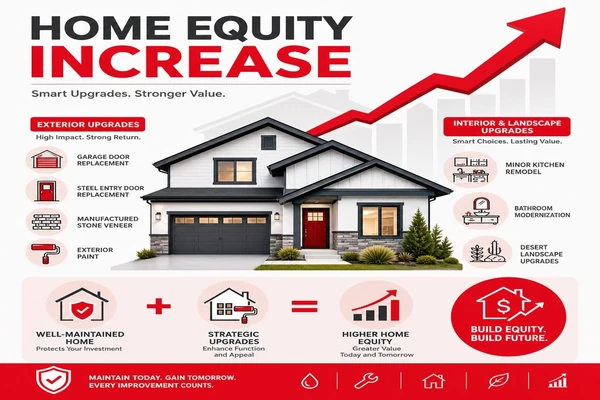
- Garage Door Replacement: This often provides the highest ROI, sometimes recouping over 100% of its cost. A modern, well-functioning garage door significantly boosts the front facade.
- Steel Entry Door Replacement: Another high-ROI project, a new steel entry door enhances security and curb appeal.
- Manufactured Stone Veneer: Adding stone veneer to a home’s exterior can provide a striking visual upgrade with a strong ROI.
- Exterior Paint: A fresh coat of exterior paint can recoup 100% or more of its cost, making the home look clean and well-maintained.
These projects are often relatively inexpensive compared to interior renovations but yield disproportionately high returns because they directly impact a buyer’s initial perception of the home.
Strategic Interior Upgrades and Desert Landscape Upgrades
Inside the home, minor remodels frequently outperform major overhauls in terms of ROI.
- Minor Kitchen Remodels: Instead of a full gut renovation, which might only return 50-60% of its cost, a minor kitchen remodel (e.g., updating cabinet fronts, countertops, and appliances) can achieve an ROI of 85-95%. Buyers appreciate modern, functional kitchens without the need for extensive, personalized luxury.
- Bathroom Modernization: Similar to kitchens, minor bathroom updates-new vanity, fixtures, lighting-can offer a better ROI than a complete overhaul or adding a new bathroom.
- Landscaping: Basic landscaping can add 5-12% to a home’s perceived value. This includes well-maintained lawns, strategic plantings, and clear pathways. For homeowners in arid regions, embracing Desert landscape upgrades can be particularly impactful. These types of upgrades not only conserve water, appealing to environmentally conscious buyers, but also create a unique, low-maintenance aesthetic that is highly valued in specific climates.
The key is to focus on neutral, functional improvements that appeal to a wide range of buyers, rather than highly customized or trendy choices that might quickly become dated or cater to a niche taste.
Frequently Asked Questions About Home Maintenance and Upgrades
How much should I save annually for home maintenance and upgrades?
We recommend setting aside 1% to 4% of your home’s value each year for maintenance. For a $300,000 home, this means $3,000 to $12,000 annually. This fund should cover routine maintenance and serve as an emergency reserve for unexpected repairs. For larger upgrades, a separate savings plan or budget based on project-specific costs is advisable.
What is the difference between home maintenance and upgrades?
Home maintenance refers to the routine tasks and repairs necessary to keep your house in good working condition, prevent deterioration, and preserve its existing value. Examples include HVAC servicing, gutter cleaning, and leak inspections. Home upgrades (or improvements) are elective changes or additions designed to enhance the home’s quality, aesthetic appeal, or functionality, often with the goal of increasing market value or improving living experience. Examples include kitchen remodels, adding a deck, or installing energy-efficient windows.
Which home maintenance and upgrades should be prioritized first?
Prioritize projects that address structural integrity, safety, and critical systems. This includes fixing any issues related to water management (roof leaks, drainage problems, plumbing issues), foundation problems, and ensuring electrical and HVAC systems are safe and functional. Once these essential elements are secure, you can then consider upgrades that offer high ROI or enhance your daily living, following a logical sequence to avoid rework.
Conclusion
Your home is a dynamic asset that benefits immensely from strategic attention. By understanding the critical distinction between essential maintenance and value-adding upgrades, we can make informed decisions that protect our investment and enhance our quality of life. From creating a robust financial blueprint with dedicated savings to establishing a smart order of operations for renovations, every step contributes to a more resilient and valuable property.
Evaluating aging systems, prioritizing high-ROI enhancements, and performing consistent maintenance are not just tasks-they are acts of stewardship. Whether it’s ensuring your foundational plumbing is sound, investing in Quality roofing upgrades, or enhancing curb appeal with Desert landscape upgrades, each decision plays a vital role. Embrace this journey with a professional, informed perspective, and you will transform your house into a home that offers long-term comfort, security, and significant equity growth.
Post HTML
