

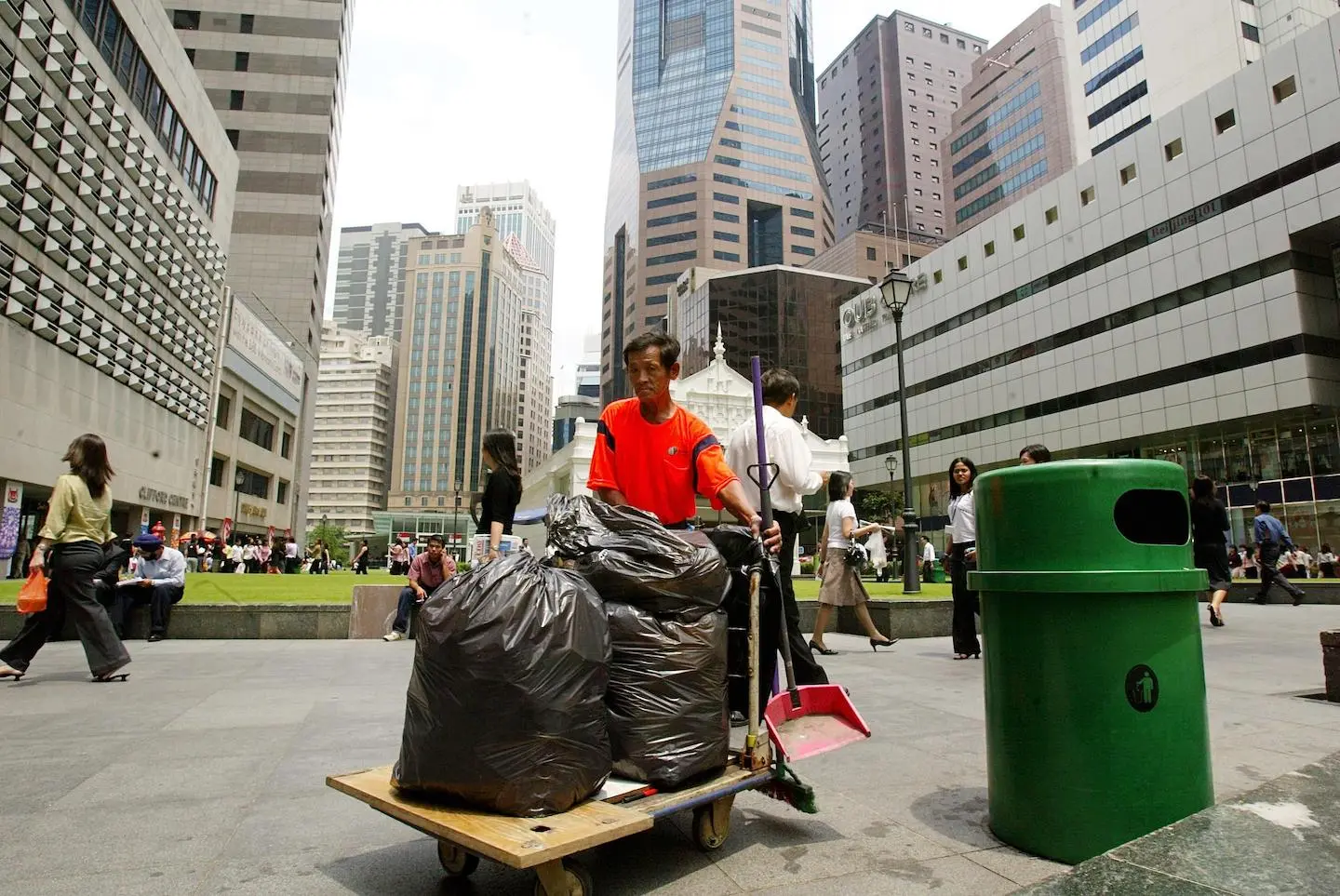
Waste removal Singapore has become one of the most pressing environmental challenges facing the island nation, with residents generating approximately 7.7 million tonnes of solid waste annually. Behind these staggering numbers lie countless stories of families, businesses, and communities grappling with the daily reality of disposal in one of the world’s most densely populated countries. The bins that line every housing estate, the collection lorries that rumble through neighbourhoods before dawn, the recycling centres tucked into void decks—these are the visible threads of an intricate system holding together a city where space is perhaps the most precious commodity of all.
Understanding Singapore’s Unique Waste Landscape
Singapore’s geography creates complications that larger nations never encounter. With limited land and no natural hinterlands for disposal, every kilogramme of rubbish carries weight beyond its physical mass. The nation’s only landfill, Semakau, sits offshore on what was once two islands, now joined by a perimeter rock wall enclosing waste incinerated and processed from across the country. When you stand at its edges and watch the egrets picking through the wetlands, it becomes impossible to ignore how this tiny nation has transformed environmental constraint into innovative necessity.
The National Environment Agency states clearly in its guidelines: “All waste collectors must be licensed under the Environmental Public Health Act.” This regulatory framework ensures that waste removal in Singapore maintains standards that protect public health whilst addressing the urgent need for sustainable practices.
The Hidden Labour Behind Clean Streets
Watch the waste collectors at work in the predawn hours, and you witness a choreography most Singaporeans never see. These workers, many of them migrants from neighbouring countries, navigate the intimate geography of every estate, learning which residents separate their recyclables, which bins overflow by Tuesday, which blocks require extra attention during festive seasons. Their labour makes possible the spotless reputation Singapore enjoys globally, yet their stories remain largely invisible.
The collection schedule varies by location, but the rhythm remains constant:
- Housing estates typically receive general waste collection three times weekly
- Commercial premises often require daily collection services
- Recyclables are gathered fortnightly in designated blue bins
- Bulky item removal occurs through scheduled appointments
Confronting the Mountain We Cannot See
Here is the uncomfortable truth: Singapore’s waste generation per capita ranks amongst the highest in the region. Each resident produces roughly 410 kilogrammes of domestic waste yearly. This figure represents more than mere statistics; it embodies consumption patterns, lifestyle choices, and societal values that ripple through every level of society. The convenience of disposability comes with consequences that extend far beyond the moment we drop something into the chute.
The Environmental Protection and Management Act mandates specific handling for different waste streams. Hazardous materials, electronic waste, and construction debris each follow distinct pathways through the removal system. Industrial waste removal Singapore facilities must comply with stringent regulations governing transport, treatment, and disposal methods that prevent environmental contamination.
Community Responsibility and Individual Action
Walking through any HDB estate on collection day reveals patterns of behaviour that determine the system’s success or failure. Some residents meticulously separate food waste from packaging, rinse containers before recycling, and reduce consumption where possible. Others treat the rubbish chute as an infinite void, indifferent to where their discards ultimately end. These individual choices aggregate into collective impact.
The Singapore government’s Zero Waste Masterplan aims to reduce waste sent to Semakau by 30% by 2030. Achieving this target requires transformation at every level:
- Residents must embrace proper waste segregation habits
- Businesses need to adopt circular economy principles
- Property managers should facilitate recycling infrastructure
- Food establishments must implement food waste reduction strategies
The Economics of Disposal
Proper waste removal singapore operations involve costs that many residents never consider. Collection services, transport logistics, incineration facilities, landfill management, and environmental monitoring all require substantial investment. The government subsidises much of this infrastructure through general taxation, but businesses and commercial entities bear direct costs through mandatory waste disposal fees.
Small businesses particularly feel these pressures. A kopitiam operator managing food waste, cardboard packaging, and general refuse must balance compliance costs against thin profit margins. Waste removal services Singapore providers offer vary in price and scope, creating decisions that affect both environmental outcomes and business viability.
Looking Towards Sustainable Futures
Innovation in rubbish removal Singapore has accelerated in recent years. Pneumatic waste conveyance systems in newer developments eliminate collection lorries entirely, sucking refuse through underground pipes to central collection points. Incineration plants generate electricity whilst reducing waste volume by 90%. These technological solutions demonstrate what becomes possible when constraint forces creativity.
Yet technology alone cannot solve what remains fundamentally a human challenge. Until Singaporeans confront their relationship with consumption and disposal, even the most sophisticated infrastructure will struggle beneath the weight of endless waste streams.
The path forward requires honest reckoning with uncomfortable realities, sustained commitment to behavioural change, and recognition that every person’s choices shape collective outcomes. Singapore’s success in managing waste removal singapore will ultimately be measured not by technological sophistication, but by whether the nation can forge a culture where waste itself becomes increasingly irrelevant.
