

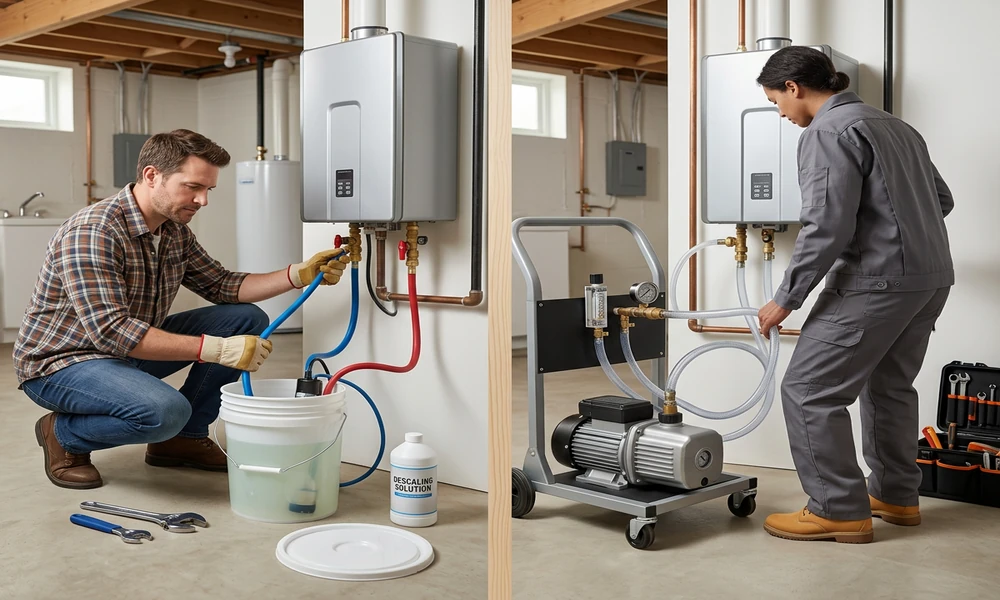
Understanding Tankless Descaling and Water Heater Maintenance
Tankless water heaters offer the convenience of endless hot water and can significantly boost energy efficiency in our homes. Yet to ensure these high-performance systems continue to operate flawlessly for years, regular maintenance is key. One of the most important tasks is descaling, which removes the mineral buildup that naturally forms inside the unit. Neglecting this crucial step can lead to reduced efficiency, higher energy bills, and a shorter lifespan for your appliance.
We understand you might be wondering whether to handle this maintenance yourself or call in a professional. This guide aims to clear up that confusion. We will carefully compare the benefits, costs, risks, and processes involved in both DIY and professional tankless descaling. Our goal is to equip you with the knowledge needed to make the best decision for your tankless water heater, ensuring it provides reliable hot water for your family.
Descaling a tankless water heater is a critical maintenance procedure that removes mineral deposits that accumulate in the unit’s heat exchanger. These deposits, primarily composed of calcium carbonate, are a natural byproduct of heating hard water. When water flows through the compact heat exchanger and is rapidly heated, dissolved minerals precipitate and solidify on the internal surfaces.
This buildup acts as an insulating layer, impeding heat transfer. As a result, the unit must work harder and consume more energy to achieve the desired water temperature, leading to a noticeable reduction in thermal efficiency. Over time, this constant strain can significantly reduce the lifespan of your tankless water heater, which is otherwise designed to last 15-20 years. In regions like Southern California, where water often contains higher mineral content, regular descaling is not just recommended but essential to maintain optimal performance and longevity.
The Science of Scale Buildup in Tankless Systems
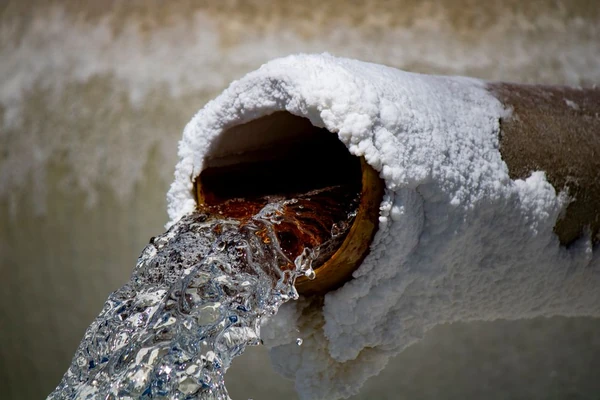
The phenomenon of scale buildup in tankless water heaters is rooted in basic chemistry. Hard water contains elevated levels of dissolved minerals, predominantly calcium and magnesium bicarbonates. When this water is heated, particularly to the high temperatures required for instantaneous hot water, these bicarbonates undergo chemical precipitation. They transform into insoluble calcium carbonate and magnesium hydroxide, which then adhere to the surfaces of the heating coils and other internal components.
This mineral layer acts as an insulation barrier, preventing efficient heat transfer from the heating elements or gas burners to the water. Even a thin layer of scale can reduce a tankless water heater’s efficiency by a noticeable percentage, increasing energy consumption. Over time, this buildup can narrow water pathways, restrict flow, and place excessive stress on the system, potentially causing premature component failure.
Recognizing the Signs Your System Needs Water Heater Maintenance
Your tankless water heater often provides subtle clues when it’s struggling with scale buildup. Recognizing these signs early can prevent more significant issues and costly repairs. One of the most common indicators is inconsistent water temperature or noticeable temperature fluctuations. You might experience hot water that suddenly turns lukewarm or cold, then back to hot.
Another red flag is reduced water pressure, especially at hot-water faucets. As scale accumulates, it restricts the internal pathways, slowing the flow of water. Unusual noises, such as rumbling, banging, or popping sounds from the unit, can also signal mineral deposits. These sounds occur as water struggles to pass through constricted areas or as trapped steam bubbles escape from under the scale. Many modern tankless units also display error codes on their digital interfaces, which often indicate the need for descaling. Finally, a general drop in the unit’s flow rate, meaning it takes longer to get hot water or you can’t run as many hot water fixtures simultaneously, is a clear sign that maintenance is overdue.
Recommended Descaling Frequency by Water Hardness
The frequency with which you should descale your tankless water heater largely depends on your local water hardness and your household’s hot water usage. Water hardness is typically measured in grains per gallon (GPG) or milligrams per liter (mg/L). For instance, the U.S. Geological Survey (USGS) classifies water with 180+ mg/L as “very hard,” and in such areas, significant scale can form within 6-12 months.
As a general guideline, most manufacturers and plumbing professionals recommend annual maintenance for homes with moderately hard water (around 7-10 GPG or 120-180 mg/L). However, if you reside in an area with very hard water or your household has exceptionally high hot water demand, descaling every 6-9 months may be necessary to prevent efficiency loss and potential damage. Conversely, if you have a water softener installed or live in a region with naturally soft water, you might be able to extend intervals to every 1-3 years. Always consult your unit’s owner’s manual for specific manufacturer recommendations, as these can vary by model and brand.
DIY Tankless Descaling: Step-by-Step Process and Risks
For many homeowners, the idea of performing their own tankless water heater maintenance, including descaling, is appealing because it can lead to cost savings. With the right tools and a clear understanding of the process, DIY descaling is certainly feasible for competent individuals. Most tankless units are equipped with isolation valves (also known as service valves) that make the process relatively straightforward. However, it’s crucial to approach homeowner maintenance with caution, ensuring you have the correct safety gear and understand each step thoroughly. While it can save you money, it’s important to weigh the time investment and potential risks against the benefits of professional service.
Required Tools and Materials for DIY Flushing
Before you begin the DIY descaling process, gather all necessary tools and materials to ensure a smooth, safe operation.
Step-by-Step DIY Descaling GuideVinegar vs. Commercial Descaling Solutions
When choosing a descaling agent for DIY maintenance, homeowners typically face a choice between white vinegar and commercial descaling solutions. Each has its own benefits and considerations.
For routine annual maintenance with moderate water hardness, white vinegar can be an efficient and economical choice. However, if you have very hard water, have neglected descaling for an extended period, or notice significant performance issues, a commercial descaler might be more effective at tackling heavy scale buildup. Always check your manufacturer’s recommendations for approved descaling agents to ensure component compatibility and avoid voiding your warranty.
Professional Tankless Descaling: When to Call a Southern California Specialist
While DIY descaling offers a cost-effective solution for some, there are distinct advantages and situations where calling a licensed plumber for professional tankless water heater maintenance becomes the superior, and often necessary, choice. A professional brings comprehensive expertise, specialized equipment, and a deeper understanding of system diagnostics, especially crucial in areas like Southern California, where water quality can vary significantly.
A licensed plumber not only thoroughly performs the descaling but also conducts a full inspection of your unit. This includes checking for potential leaks, inspecting gas lines (for gas models), verifying electrical connections, and ensuring all safety mechanisms are functioning correctly. Their trained eye can spot minor issues before they escalate into major problems, providing a level of system optimization and peace of mind that DIY efforts often cannot match.
Why Professional Water Heater Maintenance Protects Your Warranty
One of the most compelling reasons to opt for professional tankless water heater maintenance is to protect your unit’s warranty. Manufacturers like Rinnai, Navien, Rheem, and Stiebel Eltron often have specific maintenance guidelines, and many require periodic descaling by a qualified or licensed professional to keep the warranty valid.
Improper DIY descaling, or a lack of documented service, can lead to warranty issues if a component fails prematurely due to scale buildup. When you hire an expert for tankless descaling, they provide official service documentation that serves as proof that your unit has been maintained according to the manufacturer’s specifications. This documentation is invaluable should you ever need to file a warranty claim. For a deeper dive into how professional service safeguards your investment, explore resources on expert tankless descaling for valuable insights. This step ensures that your significant investment in a tankless system remains protected for its intended lifespan.
The Risks and Pitfalls of DIY Descaling Mistakes
While DIY descaling can save money, it’s not without its risks. Improper execution can lead to costly damage, voided warranties, and even safety hazards.
Considering these potential pitfalls, the initial savings from DIY might be offset by much higher repair costs or the loss of warranty protection.
What a Professional Descaling Service Includes
Hiring a professional for tankless water heater descaling offers a comprehensive service that goes beyond simply circulating a solution. A licensed plumber provides a thorough, multi-point inspection and maintenance routine designed to ensure your unit’s long-term health and efficiency.
This holistic approach by a Southern California specialist ensures that your tankless water heater is not just descaled, but fully inspected and optimized for peak performance and longevity.
Preventing Scale Build-up in Your Tankless Water Heater
While regular descaling is essential, preventative measures can significantly reduce the frequency and severity of scale buildup, contributing to your system’s longevity and consistent performance. Proactive steps to improve water quality are particularly beneficial for Southern California homes, where hard water is a common challenge.
Water Softeners and Treatment Systems
The most effective way to prevent scale buildup in your tankless water heater, and indeed throughout your entire plumbing system, is to address water hardness at its source. Installing a water softener is a primary solution. These systems use an ion exchange process to remove calcium and magnesium ions-the primary culprits behind scale-from your water before it enters your home’s plumbing. By replacing hard minerals with softer ions such as sodium or potassium, a water softener dramatically reduces the potential for scale formation.
Beyond traditional water softeners, other water treatment systems, such as whole-house filtration units, can also improve water quality. However, they may not target hardness minerals as effectively as a dedicated softener. Investing in a water softener can extend the intervals between descaling treatments, improve the efficiency of all water-using appliances, and enhance the overall quality of water for bathing and cleaning.
Manufacturer Maintenance Recommendations
Following the maintenance recommendations provided by your tankless water heater’s manufacturer is crucial for optimal performance and warranty compliance. Brands like Rheem, Stiebel Eltron, Rinnai, and Navien all offer specific advice tailored to their units.
Always refer to your specific unit’s owner’s manual for detailed instructions and recommended maintenance schedules. Adhering to these guidelines helps ensure your tankless water heater operates efficiently and lasts for many years.
Frequently Asked Questions About Tankless Water Heater Maintenance
Homeowners often have several questions about maintaining their tankless water heaters. Addressing these common homeowner concerns can clarify the process and improve tankless troubleshooting.
Is flushing the same as descaling a tankless water heater?
No, flushing and descaling are distinct processes, though both are important for tankless water heater maintenance.
While flushing is a good general maintenance practice, it is not a substitute for descaling, which specifically targets the detrimental mineral accumulation.
Can I use regular household vinegar to descale my tankless unit?
Yes, you can use regular household white vinegar (acetic acid) to descale your tankless water heater, especially for mild to moderate scale buildup. Vinegar is a gentle, natural acid that effectively dissolves calcium carbonate deposits. It’s an economical and environmentally friendly option.
However, for heavy-scale accumulation or if descaling has been neglected for a long time, commercial descaling solutions are often more effective. They may achieve better results in a shorter circulation time. If using vinegar, be prepared for a longer circulation time (potentially 2-3 hours) than with commercial solutions (45-60 minutes). Always ensure you use enough vinegar to fill the circulation loop and follow safety precautions.
Do electric tankless water heaters require descaling?
Yes, absolutely. While electric tankless water heaters don’t have gas burners or combustion chambers, they are still susceptible to scale accumulation. The heating elements within electric models, just like the heat exchangers in gas units, get very hot to heat water instantaneously. This high heat causes dissolved minerals in hard water to precipitate and form scale directly onto the heating elements.
This scale buildup on the heating elements reduces their efficiency, forcing them to work harder and consume more electricity to heat the water. Over time, it can lead to element failure and reduced hot water output. Therefore, electric tankless water heaters require the same periodic descaling maintenance as their gas counterparts to ensure optimal performance and longevity.
Conclusion
Maintaining your tankless water heater through regular descaling is not merely a recommendation; it is a fundamental requirement for preserving its efficiency, extending its lifespan, and ensuring a consistent supply of hot water for your home. Whether you choose the DIY route or opt for professional service, understanding the process, its importance, and the potential risks involved is paramount.
For those comfortable with hands-on tasks and equipped with the right tools, DIY descaling can offer significant savings. However, the comprehensive inspection, warranty protection, and peace of mind provided by a licensed professional often make it a worthwhile investment. Especially for homeowners in Southern California, where hard water is prevalent, recognizing the signs of scale buildup and acting proactively is key. By prioritizing this essential maintenance, you ensure your tankless water heater continues to deliver reliable, energy-efficient performance for years to come.
