

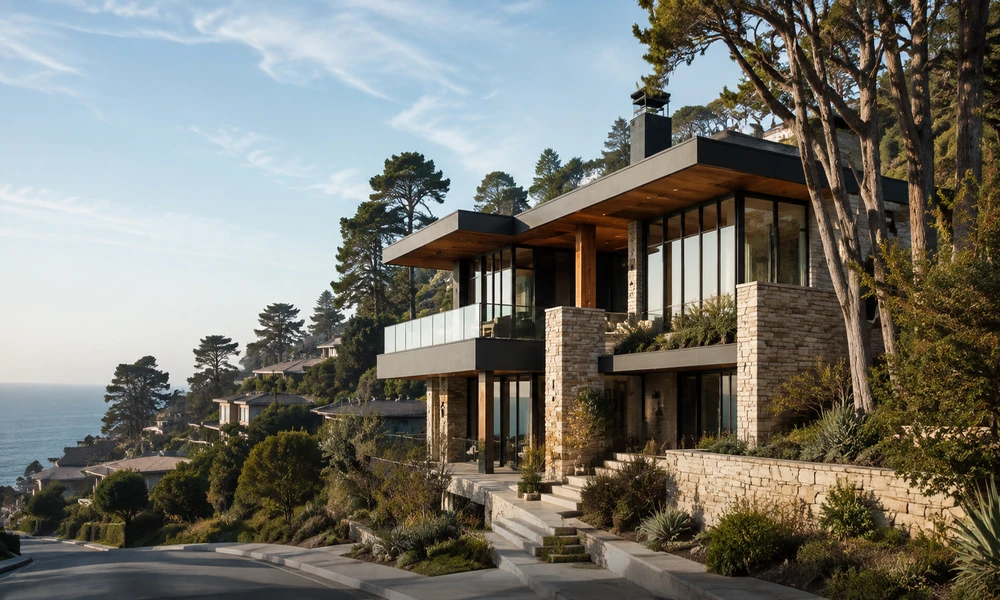
When people begin planning a building, it is tempting to start with appearance. They may picture a certain architectural style, collect reference images, or focus on materials and exterior forms they admire.
Those choices matter, but they are usually more useful later in the design process.
Strong architecture begins by understanding context: the site, the people who will use the building, surrounding conditions, circulation needs, climate considerations, existing structures, and the practical purpose of the project. When those factors guide early decisions, the final design is more likely to feel appropriate rather than simply fashionable.
Style can influence how a building looks. Context helps determine why it should look and function the way it does.
Start With the Site Before Choosing the Look
Every site places different demands on a building.
Orientation can influence how rooms receive daylight. Street conditions can affect entrances and privacy. Slopes may shape circulation and structural decisions. Existing buildings, neighboring properties, landscape features, views, and access points can all influence the design.
This is why applying the same visual formula to every property can create problems. A solution that works well on one site may make little sense on another.
Before focusing heavily on finishes or architectural labels, project teams benefit from asking more fundamental questions.
Where will people approach the building? Which areas need privacy? Which spaces should feel connected to the outdoors? Are there existing site features worth preserving or responding to? How should different users move through the property?
Answers to questions like these begin forming the structure of the design.
The resulting architecture may eventually appear minimal, traditional, industrial, sculptural, or somewhere between categories. But ideally, those visual characteristics emerge from purposeful decisions rather than being imposed before the project has been properly understood.
Let the Building’s Purpose Shape the Design
Context is not limited to geography. The intended use of a building is equally important.
A private residence must support daily routines, personal preferences, privacy, gathering, storage, and changing household needs. A multifamily building introduces shared circulation, common spaces, individual units, and relationships between residents and the surrounding neighborhood.
Educational, cultural, commercial, and civic projects introduce their own patterns of movement and use.
This means two buildings on similar sites may still require very different approaches.
Instead of beginning with the question, “What style should this building be?” a more useful starting point is, “What does this building need to accomplish?”
That shift changes the design conversation.
It encourages attention to how spaces connect, where people naturally move, which areas need flexibility, how public and private zones relate, and where architectural decisions can make everyday use more comfortable or intuitive.
A visually impressive building that does not support its actual purpose quickly becomes frustrating. Good design aims to make function and appearance reinforce each other.
Compare How Architects Respond to Different Project Types
One useful way to understand context-driven design is to compare projects that serve different purposes.
Instead of looking only for visual similarities, examine what changes from project to project. Notice how entrances are handled, how buildings meet their sites, how circulation is organized, how indoor and outdoor areas connect, and how scale changes depending on the users.
Reviewing a varied architectural portfolio, such as the project work presented by renowned architects companies, can help illustrate how different building types require different design responses.
The important lesson is not that every project should look different simply for the sake of originality. It is that architectural decisions should have reasons behind them.
A residence may prioritize intimacy and connections to landscape. A cultural building may need clearer public circulation and gathering areas. An infrastructure project may place greater emphasis on movement, durability, visibility, and integration with existing systems.
Looking at projects through this lens makes architectural portfolios more informative. Instead of asking whether you like a particular style, you begin asking whether the design responds intelligently to its circumstances.
Context Can Produce More Distinctive Architecture
There is sometimes an assumption that designing around practical constraints limits creativity.
In reality, constraints often provide the starting point for stronger ideas.
A narrow site may encourage an unusual circulation strategy. A challenging slope can create opportunities for multiple levels to connect directly with the landscape. An existing structure may lead to a contrast between old and new materials. Privacy requirements can influence window placement or courtyard design.
When architects respond carefully to these conditions, buildings can develop identities that would have been difficult to create through stylistic imitation alone.
This is one reason architecture that feels closely connected to its setting can remain compelling even when aesthetic trends change.
A building does not necessarily need unusual shapes or expensive materials to feel distinctive. Sometimes the strongest characteristic is simply the clarity with which the design responds to a specific place and purpose.
Context gives design decisions a foundation.
Ask Better Questions During the Design Process
Clients also play an important role in context-driven architecture.
The information provided during early conversations can significantly influence how a design develops. Instead of discussing only preferred materials, colors, or architectural references, clients can help by explaining how the building needs to work.
For residential projects, useful questions might include where people spend most of their time, which rooms need privacy, how frequently guests visit, and how indoor spaces should connect with exterior areas.
For commercial or institutional projects, the discussion may focus more heavily on visitor flow, staff needs, flexibility, visibility, accessibility, and long-term changes in use.
It is also worth discussing the qualities of the site itself. Which views matter? Are some surroundings better screened? Are there areas that receive particularly strong sunlight? Does the property have existing features that should influence the layout?
Clear answers give the design team better material to work with.
Visual preferences still belong in the conversation, but they become one influence among many rather than the sole starting point.
Conclusion
Successful architecture is rarely created by choosing a style first and forcing the project to fit it.
Buildings work best when they respond thoughtfully to where they are, who will use them, how people will move through them, and what the project needs to accomplish.
Starting with context does not mean ignoring aesthetics. It gives aesthetics a stronger foundation.
When site conditions, function, circulation, surroundings, and user needs shape the early design process, the resulting architecture has a better chance of feeling purposeful, specific, and lasting rather than simply reflecting a temporary visual trend.
