

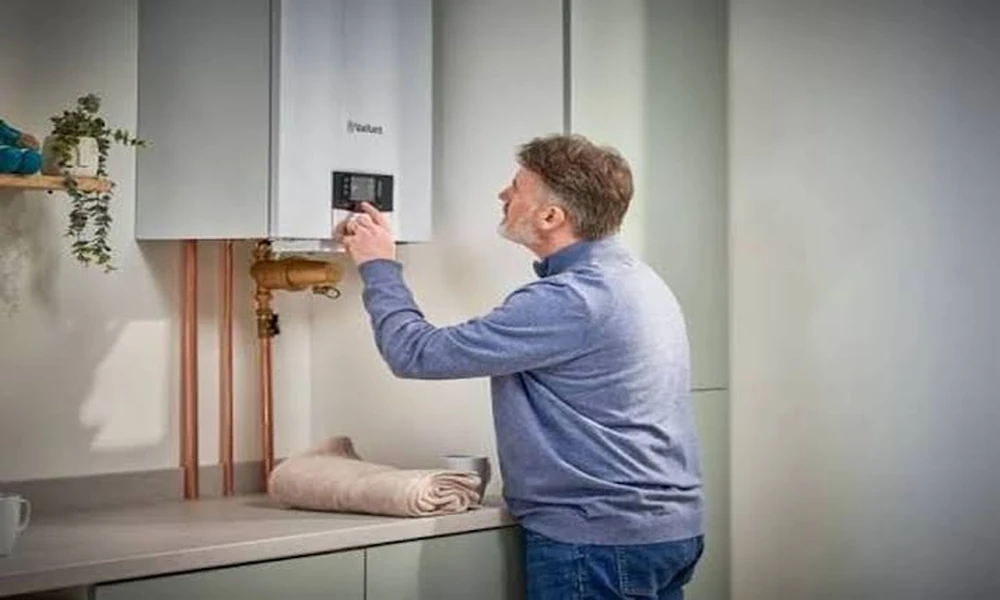
Vaillant fault codes fall into two broad categories: pressure or connection issues homeowners can often check themselves, such as F22, and internal component faults involving gas, ignition, or sensors, such as F28, F29, F75, and F62, which always require a Gas Safe registered engineer. Never ignore a repeated fault code, and never attempt to open the boiler casing yourself.
Vaillant boilers display fault codes as a safety measure, shutting down before a developing problem turns into something dangerous. Most codes point to one of a handful of causes: low pressure, ignition trouble, a sensor fault, or a gas valve issue. One of the more serious examples is the F62 code, and our guide on How to Fix a Vaillant Boiler F62 Fault breaks down exactly what triggers it and why it always needs a professional.
This article walks through the fault codes homeowners search for most often, what each one actually means, and which ones are safe to check yourself.
Understanding Vaillant Boiler Error Codes Explained Simply
Every Vaillant boiler runs a continuous internal check on pressure, ignition, and combustion safety. When something falls outside the expected range, the display shows an F-code, and the boiler locks out rather than continuing to run.
Vaillant boiler error codes explained in plain terms usually fall into one of three groups: pressure-related, ignition-related, or component- and sensor-related. Knowing which group a code belongs to helps you judge whether it’s worth a quick check yourself or an immediate call to an engineer.
F22: Low Water Pressure
F22 is the most frequently seen Vaillant fault, and it’s also the one most homeowners can resolve without help.
This code appears when system pressure drops below roughly 1 bar. Topping up through the filling loop until the gauge reads between 1.0 and 1.5 bar usually clears it. If F22 returns within a day or two, that points to a leak somewhere in the system rather than a one-off top-up issue.
F28 and F29: Ignition and Flame Loss Faults
These two codes are closely related, both involving the boiler’s ability to establish and maintain a flame.
F28 means the boiler failed to ignite at all during startup. F29 means ignition succeeded, but the flame was lost during operation. Both often relate to boiler ignition problems such as a frozen condensate pipe, a dirty ignition electrode, or gas supply interruptions, particularly in cold weather. A single reset after checking the condensate pipe for ice is reasonable, but repeated faults need a Gas Safe engineer.
F75: Pressure Sensor and Circulation Fault
F75 appears when the boiler doesn’t detect an expected change in pressure after the pump starts, which usually points to a circulation problem rather than the system pressure itself.
Common causes include a blocked or faulty pressure sensor, a failing pump, or sludge restricting flow through the system. This fault often becomes more frequent in hard water areas, where limescale gradually affects sensor accuracy and pump performance.
F62: Gas Valve Shutoff Fault
F62 is one of the more serious codes a Vaillant boiler can display, and it should never be treated as a minor glitch.
This fault triggers when the boiler detects a delay in the gas valve closing after the burner switches off. It signals a genuine safety concern, since gas flowing when it shouldn’t be is exactly the scenario the boiler’s safety systems are designed to prevent.
Vaillant Gas Valve Faults: What Causes F62
Several underlying issues can trigger this specific fault, and diagnosing the exact cause usually needs specialist testing.
Vaillant gas valve faults behind an F62 code typically stem from mechanical wear inside the valve itself, a printed circuit board sending incorrect signals to the valve, or a worn ignition electrode misreading the combustion process. In some cases, more than one of these issues is present at once, which is part of why this fault often takes longer to diagnose than others.
Faulty Gas Valve Symptoms to Watch For
Recognising the early signs before a full lockout occurs can prompt a service visit sooner rather than later.
Faulty gas valve symptoms include the boiler locking out repeatedly, a burner that seems slow to shut off, unusual smells near the boiler, or inconsistent flame behaviour reported during a recent service. Any of these on their own are worth mentioning to an engineer, even before a fault code appears.
Comparing the Most Common Vaillant Fault Codes
| Code | Meaning | DIY Check Possible |
|---|---|---|
| F22 | Low water pressure | Yes, top up via filling loop |
| F28 | Ignition failure | Limited, check condensate pipe |
| F29 | Flame lost during operation | Limited, check condensate pipe |
| F75 | Pressure sensor or circulation fault | No, needs an engineer |
| F62 | Gas valve shutoff fault | No, needs an engineer |
Why F62 Always Needs Professional Repair
Unlike a low-pressure warning, F62 involves gas safety components directly. Vaillant’s own guidance is explicit that homeowners shouldn’t open the boiler casing or attempt any repair themselves.
Turning off the gas supply at the meter and booking a Gas Safe boiler repairs specialist is the correct response. Depending on the diagnosis, the fix may involve replacing the gas valve, the PCB, or the ignition electrode, and identifying which component is at fault often takes longer than a routine service call.
Frequently Asked Questions
What does F62 mean on a Vaillant boiler?
It means the boiler detected a delay in the gas valve closing after the burner switched off, usually caused by a faulty valve, PCB, or ignition electrode.
Can I fix an F62 fault myself?
No. This fault involves gas safety components and must be diagnosed and repaired by a Gas Safe registered engineer.
Is F62 dangerous?
It can be. The boiler locks out specifically to prevent unsafe gas flow, so the fault should be treated seriously and not repeatedly reset.
What’s the difference between F28 and F29?
F28 means the boiler failed to ignite at all, while F29 means it ignited successfully, but the flame was lost shortly after.
Why does my boiler keep showing F75?
This usually points to a pressure sensor or pump issue, often linked to sludge or limescale build-up affecting circulation.
How can I prevent Vaillant fault codes from appearing?
Annual servicing by a Gas Safe engineer catches most developing faults, including valve wear, sensor blockages, and limescale build-up, before they trigger a lockout.
Getting Fault Codes Diagnosed Properly
Vaillant fault codes exist to protect your home, not to complicate your day, and understanding what each one signals helps you respond appropriately rather than panicking or ignoring it. Pressure-related codes are often a quick fix, while gas, ignition, and sensor faults need proper diagnosis from a qualified professional.
0800 Homefix provides Gas Safe registered boiler repairs across London and the South East, including specialist diagnosis of Vaillant fault codes such as F62, backed by a 24/7 emergency response and no call-out fee.
