

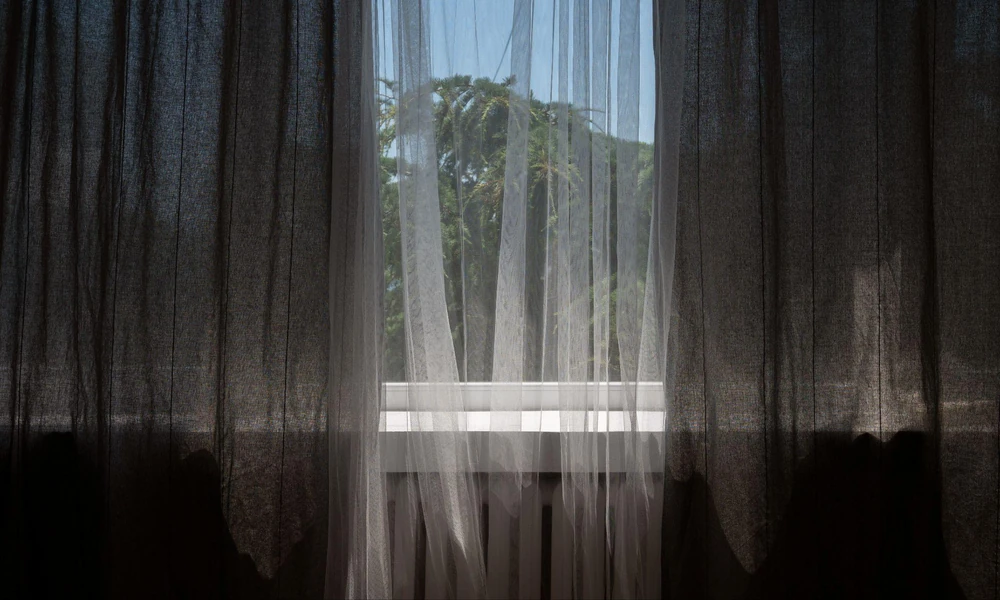
Image Recommendation: A window with a sheer inner curtain drawn and a heavier outer curtain pulled open to the side, both on visible separate tracks.
‘Day curtain’ sounds like a curtain drawn in the morning and swapped out at night, something changed depending on the time of day. That’s not quite what the term actually means. A day curtain is a specific type of sheer, light-filtering fabric meant to hang alongside a heavier curtain, working as one half of a two-layer system rather than a standalone piece swapped in and out.
What a Day Curtain Is Actually Built to Do
A day curtain is made from a sheer or semi-sheer fabric, loosely woven enough to let soft, diffused light through while still breaking up a direct line of sight from outside. Day curtains in Singapore homes are typically drawn during daylight hours to soften harsh sun and maintain some privacy without blocking the view entirely, then paired with a heavier curtain or blackout layer drawn closed at night or when full privacy and darkness are needed. Used entirely on its own, a day curtain can soften glare reasonably well, but it won’t block much heat, light, or sound by itself, which is exactly why it’s rarely sold or installed as a single, standalone layer in the first place.
Why the Pairing Matters More Than the Fabric Choice
Most two-layer setups run a sheer day curtain on an inner track closest to the window and a heavier curtain or blackout fabric on an outer track, so either layer, or both together, can be drawn depending on the time of day and the amount of privacy or darkness needed. Skipping the second layer to save on cost is a common shortcut, but it usually means losing exactly the function the day curtain was meant to be paired with in the first place: real blackout and proper heat and sound insulation, once night actually falls. A day curtain alone handles daytime glare reasonably well and does very little else.
Where a Two-Layer Setup Tends to Matter Most
- Bedrooms where both daytime privacy and full night-time blackout genuinely matter.
- Living rooms with west-facing windows catching strong afternoon sun.
- Homes near busy roads where sound and heat both need addressing, not just light.
Why Custom Measurements Matter More in Singapore Homes Than People Expect
Singapore apartments are full of window shapes that don’t match standard retail curtain sizing: floor-to-ceiling glass panels, bay windows, sliding doors that need a curtain to clear a track without dragging on the floor. Off-the-shelf curtains, even good-quality ones, are made to generic width and drop measurements that rarely match these exactly, which usually means either visible gaps at the sides that let light leak through, or excess fabric pooling awkwardly on the floor. A custom curtain is measured and made to the actual window, track position, and ceiling height of a specific room, which matters most when a two-layer day-and-night system is involved, since both layers need to align and clear each other properly rather than just one of them fitting well. Getting this wrong on even one layer tends to undermine the whole point of running two tracks in the first place.
A Few Questions Worth Asking Before Ordering Either Layer
1. Whether the day curtain is being chosen as a standalone piece or as half of a two-layer system from the start.
2. Whether the window’s actual dimensions, including any unusual height, width, or obstruction, have been measured rather than estimated.
3. Whether the two layers, if both are being installed, are being fitted to run independently without snagging against each other.
A day curtain bought in isolation isn’t a mistake exactly; it just isn’t doing the job most people assume it is. Knowing what it’s actually meant to pair with, and getting that pairing properly measured for the room it’s going into, tends to matter more in the long run than which fabric gets chosen first, especially once the novelty of a nice-looking sheer has worn off and the room still feels too bright at night or too warm in the afternoon.
Working out whether a space needs one layer or two, and getting both properly measured for the windows in question, is easier with an actual visit than a guess from a catalogue. Contact De Art Studio to arrange that.
