

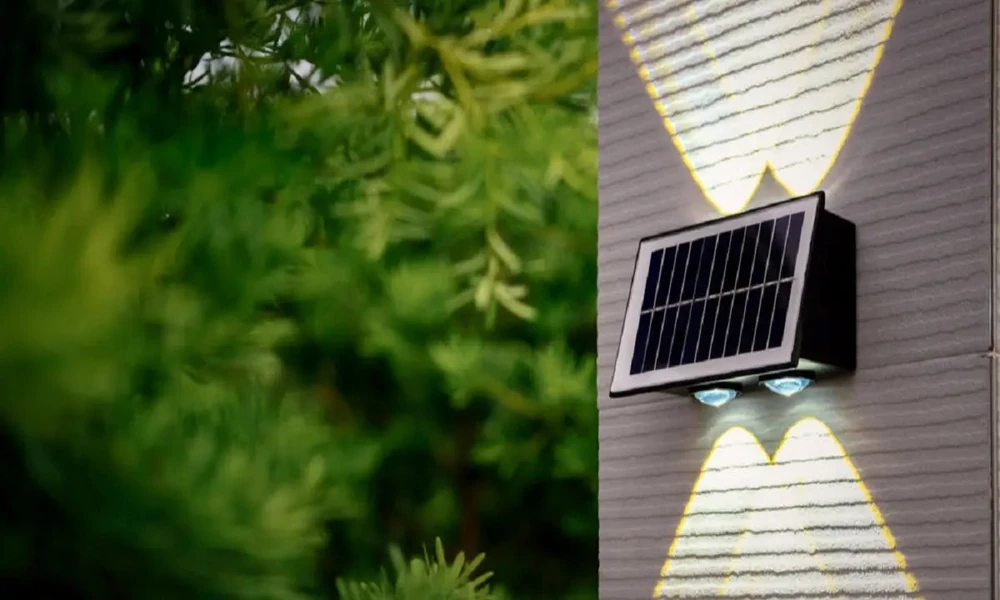
Solar wall lights are an easy way to add light to a fence, a shed, a patio wall or a back door without running a wire. The sun charges a small battery during the day, and the fixture turns on by itself at dusk. The idea is simple, but results vary a lot between products, so a few checks before you buy are worth the time. If you want to see what is on offer as you read, you can browse a selection of solar wall lights first.
How solar wall lights work
Each light has a solar panel, a rechargeable battery, an LED and a sensor. The panel collects energy in daylight, the battery stores it, and a light sensor switches the LED on when it gets dark. Many models also add a motion sensor so the light brightens when someone walks by.
Placement matters most
The panel needs real sunlight. A wall that sits in shade most of the day will leave the battery half-charged and the light dim by midnight. Pick a spot that gets several hours of direct sun, or choose a model with a separate panel on a cable so the panel can sit in the sun while the light sits where you need it.
Look at the battery and the LED
Battery capacity decides how long the light runs. Lithium batteries generally hold up better in cold weather than older types. For the LED, choose a warm color around 3000K for patios and entries. This lines up with DarkSky International’s guidance on warm-colored, controlled outdoor lighting.
Modes and sensors
Look for a choice of modes, such as a steady dim glow, motion-triggered full brightness, or both. Dim-then-bright settings are ideal for a walkway because they save charge and still react when needed.
Weather and build
Check the water-resistance rating. A sealed housing and a durable finish matter, since the fixture sits outside all year. Panels that are tilted slightly shed dust and snow more easily.
Where they work best
Solar wall lights suit fences, garden walls, steps, sheds and covered patios. For a main entry or a spot that must be reliably bright every night, a wired fixture may be the safer choice, with solar used for secondary areas.
Browse the options
If you are ready to compare styles, finishes and sizes, you can explore a range of solar wall lights and see which design fits your home.
Care tips
– Wipe the panel every month or two so it charges well.
– Charge fully in sun before first use.
– Replace the battery when run time drops.
– Check that nothing, such as a plant or an overhang, grows over the panel.
Compare solar with wired options
Solar fixtures cost less to install because there is no trenching, no electrician and no ongoing electricity cost. The tradeoff is that output depends on weather and season. In winter, with short days and low sun, a solar light may run for fewer hours or at lower brightness. Wired lights give steady output all year. Many homeowners use both: wired fixtures for the entry and driveway, and solar fixtures for the garden, fence and other places where wiring would be difficult.
Think about security and safety
For security, motion-triggered solar lights can be useful along side gates and dark corners, since the sudden brightness draws attention. For safety on steps, a steady low glow is better than a light that only comes on with movement. Decide what the light is for before choosing the mode.
Install with care
Mount the light on a solid surface using the supplied screws and anchors. Aim the panel south in the northern hemisphere and keep it free of shade. Test the light at night after the first full charge, and adjust the sensor angle if it triggers too often or not at all.
With the right placement and a decent battery, solar wall lights give you steady, low-maintenance light for years.
