

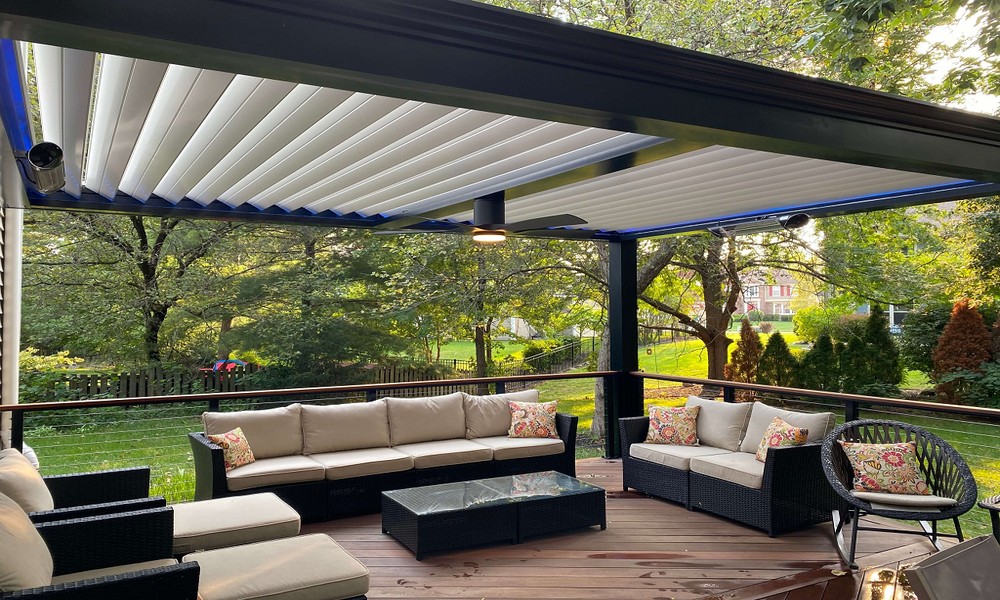
Louvered pergolas have revolutionized outdoor living by offering adaptable shade, ventilation, and weather protection. Central to their appeal is the ability to adjust the louvers – the slats that open and close – to control sunlight and airflow. But that control can come through manual or motorized systems, and choosing between them isn’t always straightforward.
This article breaks down both options in detail, highlights their advantages and drawbacks, and offers guidance on how to select the ideal system based on your lifestyle, budget, and outdoor space needs.
What Is a Louvered Pergola Control System?
A louvered pergola features adjustable horizontal slats that can pivot to regulate sun, shade, and rain protection.
The control system is how you adjust those slats:
- Manual: You physically adjust louvers using gears, poles, or cranks.
- Motorized: An electric motor moves the louvers at the push of a button, remote, app, or automated schedule.
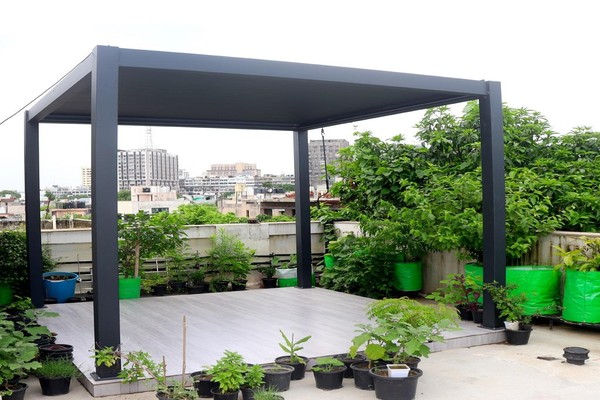
The choice affects convenience, cost, maintenance, and overall experience.
Manual Louvered Pergola
Manual louvered pergolas use mechanical components like cranks, hand levers, or ratcheting systems. You or another user physically turn the mechanism to open, close, or tilt the slats.
Advantages
- Lower Cost
- Manual systems are typically more affordable upfront.
- Fewer components mean reduced installation costs.
- Simplified Design
- Fewer electronics and motors reduce complexity.
- Easier to repair if a part wears.
- No Electricity Needed
- Perfect for remote or off-grid installations.
- Minimal power requirements.
- Durability
- Less dependency on electronic parts means fewer potential failure points.
- Ideal in harsh or remote climates.
Disadvantages
- Effort Required
- Adjusting larger pergolas manually can be strenuous, especially for taller structures.
- Less Precise Positioning
- Fine-tuning louver angles manually may be harder compared to motorized tweaks.
- Limited Automation
- You can’t automate adjustments based on weather or time of day.
Motorized Louvered Pergola
Motorized louvered pergolas use an electric motor, usually wired into home power or solar, paired with a remote control, wall switch, or smartphone app. Some integrate with smart home systems or weather sensors.
Advantages
- Ultimate Convenience
- Adjust louvers with a button push or voice command.
- Great for everyday use and seamless experience.
- Automation Capabilities
- Integrate with weather sensors to automatically close in rain or wind.
- Schedule opening/closing based on sun path or personal preference.
- Enhanced Precision
- Motor controls allow exact positioning and smooth transitions.
- Improved Accessibility
- Excellent for people with limited mobility or for pergolas in hard-to-reach places.
Disadvantages
- Higher Upfront Cost
- Motors, smart controls, and wiring add to installation budgets.
- Power Dependency
- Requires electricity or solar power supply.
- Power outages require backup plans if automation is crucial.
- Maintenance Considerations
- Motors and electronics may need servicing or replacement over time.
Comparing the Two: Side-by-Side
|
Feature |
Manual Control |
Motorized Control |
|---|---|---|
|
Cost (Upfront) |
Lower |
Higher |
|
Installation Complexity |
Easy |
Moderate / Requires Power |
|
Ease of Use |
Manual effort |
One-touch convenience |
|
Automation / Smart Features |
❌ |
✔️ |
|
Maintenance Needs |
Low |
Moderate (electronics) |
|
Durability |
High |
Moderate |
|
Best For |
Simple patios, budget-minded |
Everyday use, luxury outdoor spaces |
Which One Should You Choose?
Choose Manual If:
- You want a budget-friendly option
- The outdoor space is small or low-use
- There’s limited or no electrical access
- You prefer simplicity and few moving parts
Best For: Vacation homes, cabins, small patios, budget remodels.
Choose Motorized If:
- You value convenience and modern tech
- You want smart features or weather sensors
- You plan frequent daily use
- Accessibility is a priority
Best For: Luxury patios, frequent entertainers, smart-home environments.
Real-World Scenarios
Cozy Backyard Patio (Manual):
You use your pergola occasionally – manual controls keep costs low and maintenance minimal.
Modern Entertaining Space (Motorized):
You host often. A motorized system lets you control shade or rain protection without leaving conversations or the dinner table.
Large Poolside Pergola (Motorized):
Large spans and multiple users benefit from remote control and automation features – especially mid-summer when the sun shifts quickly.
Installation & Long-Term Tips
- For Manual: Ensure high-quality hardware so joints and cranks remain smooth over years.
- For Motorized: Plan power access early and consider backup power or manual override in case of outages.
Ask about warranties for motors and electronics – these can vary widely.
Conclusion
There’s no one-size-fits-all answer – but understanding how you’ll use your pergola, what you’re comfortable operating, and how much you’re willing to invest makes the decision clearer.
- Manual controls – reliable, economical, straightforward.
- Motorized systems – futuristic, convenient, and automated.
Ultimately, the “right” choice enhances your enjoyment of outdoor living – whether you turn the crank yourself or press a button.
