

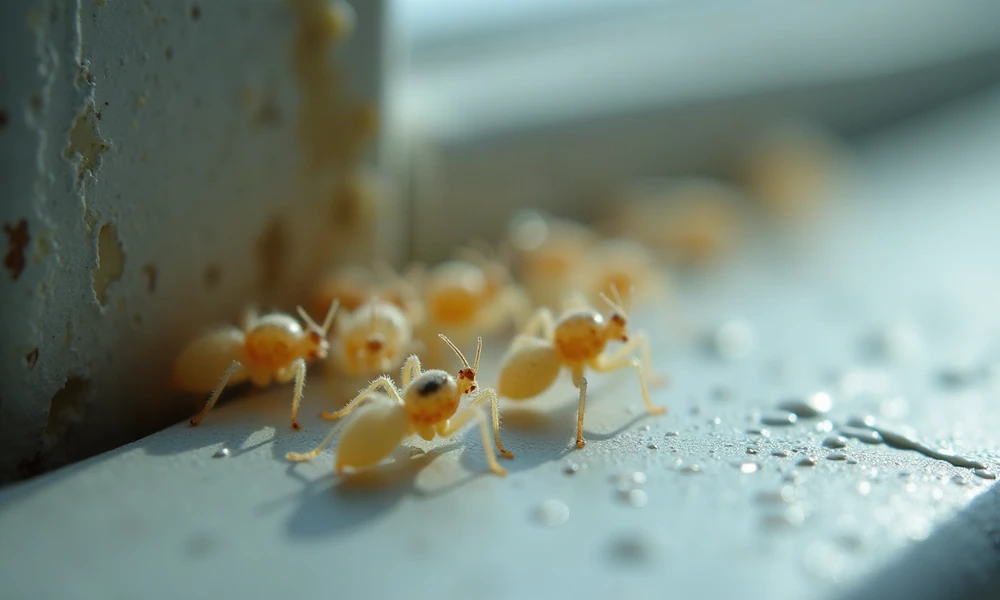
Image Recommendation: A close-up macro shot of tiny pale mites on a damp wall surface near a windowsill, magnified detail visible.
Mould mites aren’t mould. They’re tiny pale insects that feed on mould, and their presence usually means there’s an active mould problem nearby for them to feed on. Treating them as the same issue, and reaching for the same fix, is one of the more common reasons a mite problem keeps coming back even after a surface gets wiped down.
What’s Actually Crawling Around
Mould mites are barely visible to the naked eye, pale or translucent, and tend to show up in clusters on damp surfaces, inside stored food, or around windowsills and bathroom tiles where humidity sits high. Knowing how to get rid of mould mites starts with accepting that they’re a symptom rather than the root problem; they showed up because conditions were already right for mould to grow, and mites simply followed the food source.
Why Wiping Them Away Doesn’t Actually Solve It
Cleaning visible mites off a surface deals with what’s in view, but mites breed quickly wherever humidity and a mould food source persist, which means a wipe-down without addressing the underlying dampness tends to see the same cluster reappear within days or weeks. The mites aren’t the infestation to solve; the moisture and mould feeding them are.
Steps That Actually Address the Cause
1. Identify and fix the source of excess humidity, a leak, poor ventilation, or condensation building up in one spot.
2. Remove the mould the mites are feeding on, not just the mites themselves, using a proper treatment rather than a surface wipe.
3. Bring humidity down to a level that doesn’t support mould regrowth, through ventilation, dehumidifying, or airflow changes.
4. Recheck the area after a week or two, since mites and the mould behind them tend to resurface quickly if any step was skipped.
Where DIY Approaches Tend to Fall Short
- Household cleaners can kill visible mould on a surface without touching what’s established underneath or inside a wall cavity.
- A mite infestation covering a small visible patch can reflect a much larger hidden mould source feeding it.
- Repeated DIY treatment that keeps failing is usually a sign the underlying mould, not just the mites, needs proper assessment.
Why Mites Tend to Spread Before Anyone Notices
Mould mites reproduce quickly in the right conditions, which means a cluster that seems to appear overnight has usually been building for a while in a spot nobody was checking regularly, behind furniture pushed against a damp wall, inside a cupboard with poor airflow, or along a windowsill that collects condensation every morning. By the time they’re visible enough to notice during a normal walk through a room, the underlying mould is often more established than the mite cluster alone would suggest.
What Makes a Space More Prone to This in the First Place
- Rooms with limited airflow, especially storage areas, built-in wardrobes, and spaces behind large furniture.
- Areas near a known past leak or water damage, even if the surface was dried and repainted at the time.
- Spaces where humidity regularly sits high without a dehumidifier or consistent air-con use.
What Professional Treatment Actually Costs to Find Out
Getting a clear answer on mould removal price in Singapore usually starts with a proper inspection rather than a guess over the phone, since the cost depends heavily on how much hidden mould is actually behind the visible patch feeding the mites. A paid inspection that credits its cost toward treatment, rather than a free estimate based on a photo, tends to give a more honest picture of what’s actually involved.
What a Proper Treatment Actually Involves
Professional mould treatment generally works in two parts: removing the visible mould itself, then applying a misting treatment designed to address what’s left behind at a level a surface wipe can’t reach. That second step is usually what separates a fix that holds from one that resurfaces within weeks, since the mites and the mould feeding them both depend on conditions the first step alone often doesn’t fully clear.
A mite problem that keeps returning isn’t a sign the wrong product was used. It’s usually a sign the actual mould source was never properly dealt with in the first place, and no amount of surface cleaning changes that until the humidity and the mould behind it are addressed directly.
Working out whether a mite problem points to a small or a larger hidden mould issue is easier with a proper inspection than repeated guesswork. Contact Mouldgone to arrange one.
