

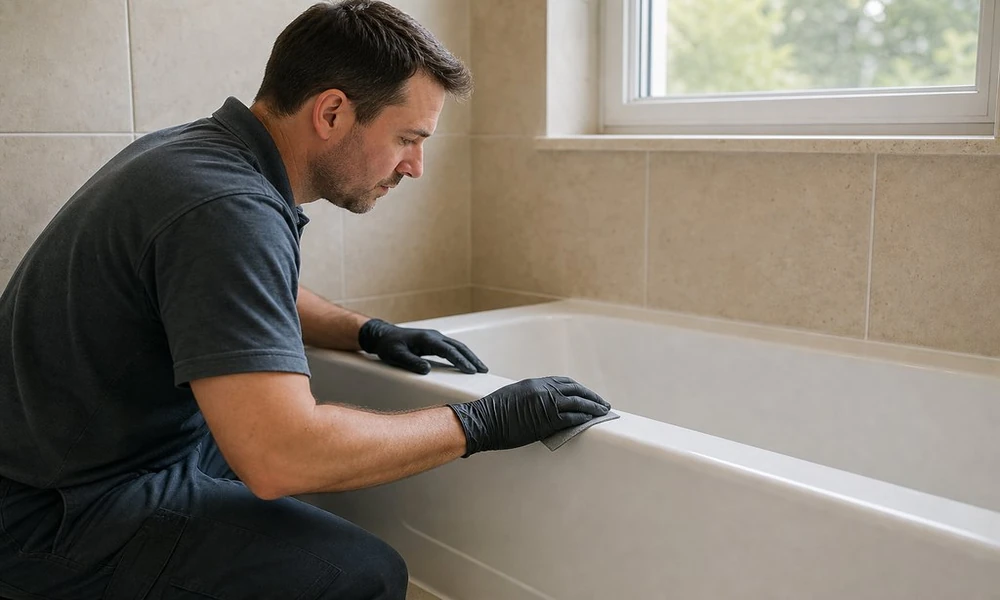
There is something about a tired tub that makes it a priority just when you need it least. Guests arrive Friday. A rental property must be prepped. Listing photos are set for Monday morning. Suddenly the chip next to the drain or the stain around the overflow cannot be overlooked any longer.
In a home with only one working bath, removing a fiberglass tub is seldom a relaxed weekend undertaking. Replacement often calls for tearing things apart, moving pipes, dust and debris, hauling, and losing access to a bathroom for several days. Focused repair and refinishing can sometimes resolve the visible issues without having to take out the tub altogether.
Surface Damage
Chips near the drain are very common because that area is constantly being kicked, bumped, scrubbed, and exposed to water. Even a small nick can look much worse once dirt gets embedded in it. If you’re considering professional repairs, Renew-It Refinishing can help restore the damaged area and improve the overall appearance of the surface.
Usually, the repair person will clean and dry the spot. They might need to trim away loose bits so the patch has a firm surface to adhere to. Once they apply the filler and it hardens, the area will be leveled and tinted to match the surrounding surface and reduce the appearance of the defect.
This is more than putting a bandage over a discolored patch. It is also about restoring a smooth surface that is easy to clean and won’t trap dirt around the edges. Before any repair work, the technician should verify that there isn’t a leak or loose plumbing beneath the drain, since cosmetic patches won’t fix moisture issues originating from the fixture itself.
Floor Cracks
A long, thin crack on the floor can turn a bathtub into a liability waiting to happen. In some instances the crack is restricted to the glaze. In others, it indicates underlying movement, frequently due to insufficient support or a loose base.
Minor flaws tend to grow.
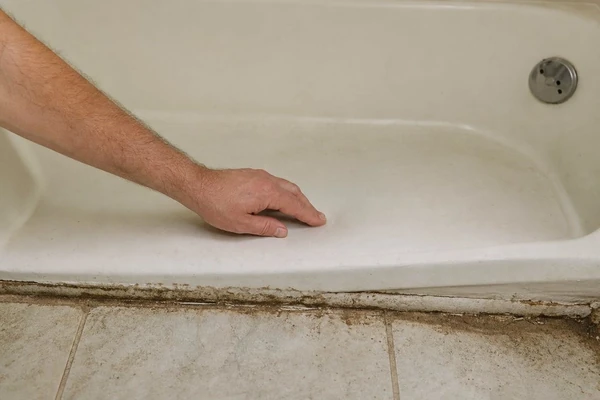
Fiberglass tub surface damage
Does the floor of the tub bow when someone stands in it? If the fiberglass is flexing, a cosmetic fix will likely split again because the material underneath is still warping. Depending on the tub’s installation, a skilled technician may need to look underneath or access the area through an adjoining wall to evaluate the foundation.
If the structure is sound, the damaged region can be opened up, filled with a suitable repair material, sanded smooth, and glazed. It is a much simpler procedure than replacing the entire unit, but it does call for adequate setup. Certain finishes require proper ventilation and a full curing cycle before water exposure is safe. Is it possible for the family to not use the bathroom for the time required?
Overflow Stains
Dirt around the overflow can give a dirty impression of the whole tub, even in a well-kept bathroom. Yellow, brown or gray staining can occur due to minerals, soap residue; https://www.nytimes.com/wirecutter is the page that actually explains it, moisture trapped behind a plate cover or old caulk and may not come off with normal cleaning.
It’s important to distinguish between cosmetic discoloration and active leaks. If water has been leaking behind the overflow plate, you’ll want to have the leak fixed before refinishing. Water can damage other materials and affect your repair job if it continues to get behind the tub.
For cosmetic issues, you can often have the tub refinished and achieve a more uniform look. During prep, the overflow plate may be removed so that the coating can be smoothly applied around the opening rather than leaving an uneven edge or ring of unfinished surface.
Repair Weekend
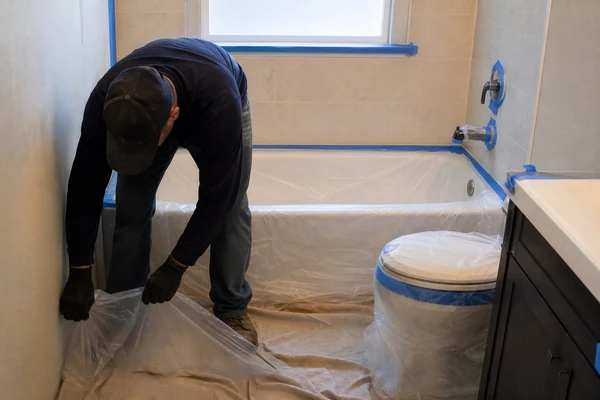
Fiberglass bathtub refinishing
Repairing a tub is generally less disruptive than replacing a tub, but you still should prepare a bit. You may need to move items out of the way or cover walls, floors, drains and vents with dust sheeting or plastic.
Before booking your appointment, make sure you’re prepared for the following:
- Take away shampoo bottles, bath mats, shower curtains and any other loose items.
- Confirm that the bathroom will be dry for the length of time required for the repair to cure.
- Determine if there is adequate ventilation in the bathroom while the repair is happening and after.
- Ask if any additional repair is needed to existing caulk, loose drain trim or loose overflow plate hardware.
- Only keep any touch-up product provided by the repair company if they recommend keeping it and have told you how to store it.
If you’re renovating a rental property or preparing for a real estate showing, planning ahead is essential. Although the tub might look good right away, you shouldn’t use it until the product has cured.
For Portland homeowners, a good question is how the technician will shield adjacent surfaces. If the painter is in a hurry to mask off painted drywall, tile, vanities, and flooring in hallways, overspray, sanding debris and solvent fumes may cause problems.
Ask if the quote includes prep, paint color matching, removal and replacement of drain/overflow plates where possible, and post-job cleanup. Also ask what circumstances void the workmanship warranty, particularly if there are existing coatings or the tub has undergone multiple repairs. Well-defined terms make it easier to compare bids.
Upon completion of the refinishing process, inquire as to when regular cleaning may commence.
Nonabrasive cleaners and a soft cloth will extend the longevity of the coating, however, the use of suction-cup mats, abrasive powders or extended standing water will reduce the longevity of both the look and lifespan of your newly refinished surface.
Repair or Replacement
If a tub is severely warped, repeatedly splitting due to structural movement, leaking outside of the fixture or severely damaged, you may want to replace the tub. However, there are often instances where minor chips, small cracks and stains don’t warrant replacing the entire unit.
Repairs allow you to avoid the mess and disruption of a complete renovation, while keeping surrounding tile and flooring intact. It also allows you to keep using the rest of the bathroom and focus on the actual problem rather than an entirely new project.
When deciding if a repair or full replacement is necessary, check for flexing in the bottom of the tub, look behind the overflow plate for moisture damage and assess how long the bathroom needs to be out of commission.
