

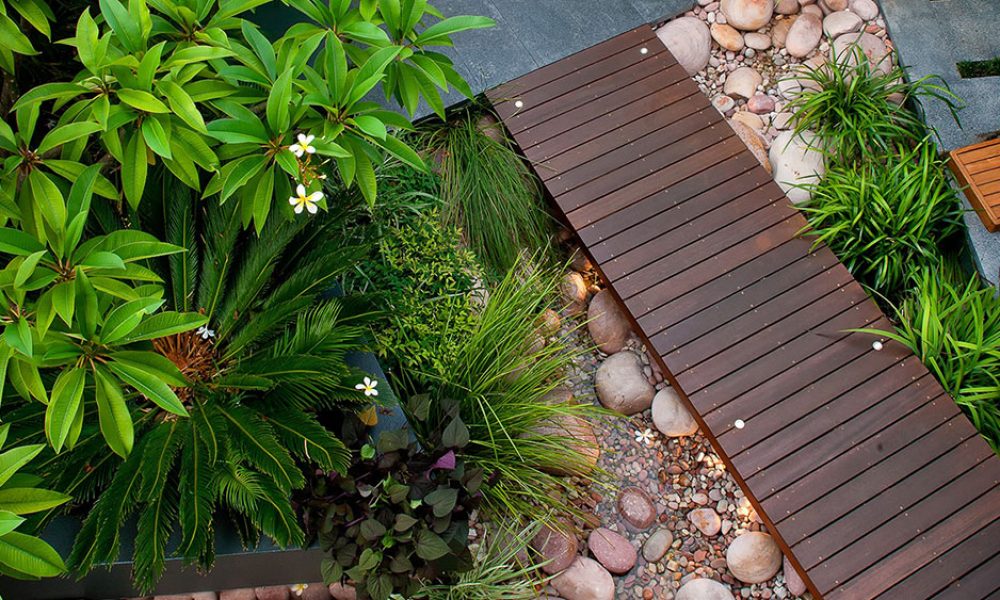
Creating an impressive outdoor space requires more than just placing plants or constructing walkways. The true essence of effective landscape design lies in maintaining a balanced combination of hardscape and softscape elements, complementing your home’s exterior through thoughtful planning and cohesion. When these components are carefully planned and integrated, they result in outdoor environments that enhance visual appeal while offering comfort, functionality, and ease of use in daily life.
Hardscape: The Structural Foundation
Hardscape includes the permanent, non-living components that create the structural framework of a landscape. These features define spaces, add durability, and improve the practical use of outdoor areas. By establishing clear layouts and boundaries, hardscape elements provide a strong foundation that supports and enhances the placement and growth of surrounding softscape features.
Common hardscape elements include:
- Pathways and walkways
- Patios and decks
- Retaining walls and fences
- Driveways
- Outdoor kitchens and seating areas
Typical materials used:
- Stone
- Brick
- Concrete
- Gravel
- Wood
- Pavers
Hardscaping ensures stability and long-term functionality, making outdoor spaces easier to navigate and maintain.
Softscape: The Living Beauty
Softscape consists of all the natural, living elements that bring life and vibrancy to a landscape. These features introduce color, texture, fragrance, and seasonal change, giving outdoor spaces a refreshing and dynamic character.
Key softscape elements include:
- Plants and flowers for color and visual appeal
- Trees and shrubs for shade, privacy, and structure
- Grass and ground cover to fill open spaces and prevent erosion
- Soil and mulch to support plant health
- Irrigation and drainage systems to maintain growth and prevent water damage
Softscape elements soften the rigid appearance of hardscape structures and create a welcoming, natural atmosphere.
Why Balance Matters
A successful landscape design relies on the right mix of hardscape and softscape. Too much hardscape can make a space look cold and rigid, while excessive softscape may lead to high maintenance and lack of structure.
Balanced landscaping offers:
- Visual harmony between natural and built features
- Reduced maintenance through smart hardscape placement
- Improved water management and soil protection
- Enhanced overall property appeal
When thoughtfully planned, this balance results in a landscape that is both beautiful and practical.
Tips for Achieving the Right Balance
- Layering: Combine tall trees with mid-sized shrubs and low ground cover for depth.
- Color Harmony: Pair neutral hardscape tones with vibrant plant colors.
- Softened Edges: Use plants along pathways and patios to create smooth transitions.
- Scale and Contrast: Match large structures with appropriately sized plants.
- Natural Materials: Select hardscape materials that blend with the surrounding environment.
The Takeaway
Hardscape elements offer durability and structure, while softscape features bring natural beauty and movement. When thoughtfully combined, they create a landscape that is visually appealing, practical, and sustainable year-round. Early planning of this balance helps ensure outdoor spaces remain comfortable, inviting, and functional across all seasons.
